
The pain came out of nowhere - a sudden, searing bolt of electricity ripping through your cheek, your jaw, maybe even behind your eye. It lasted only seconds, but those seconds felt like an eternity. And then it happened again. And again. If this is your reality, you may be living with trigeminal neuralgia, one of the most intensely painful conditions in all of medicine. Some medical texts have called it "the suicide disease" because of how profoundly it disrupts the lives of those who suffer from it.
But here's what we want you to know: you don't have to keep white-knuckling your way through it. At Texas Nerve and Spine in Stafford, TX, our team specializes in treating complex nerve pain conditions - including trigeminal neuralgia - using advanced, non-surgical, drug-free protocols that go after the root cause rather than just blunting the symptoms. If you've been searching for a trigeminal neuralgia specialist in Stafford, TX who actually listens and offers a different path forward, you've come to the right place.

Trigeminal neuralgia - sometimes referred to by its older clinical name, tic douloureux - is a chronic pain condition affecting the trigeminal nerve, the fifth cranial nerve responsible for carrying sensation from your face to your brain. This nerve has three branches: one serving the forehead and eye area, one covering the cheek and upper jaw, and one reaching the lower jaw and chin. When this nerve becomes irritated, compressed, or damaged, it can fire pain signals that are wildly out of proportion to whatever triggered them.
The pain is often described as an electric shock or a bolt of lightning across the face. It can be triggered by the most ordinary activities - chewing food, brushing your teeth, applying moisturizer, feeling a breeze against your skin, or even smiling. Episodes can last a few seconds or linger for several minutes, and they tend to come in clusters that can leave you physically and emotionally exhausted. Some people develop a constant, dull burning between the acute episodes, which is sometimes classified as atypical or Type 2 trigeminal neuralgia.
According to the National Institute of Neurological Disorders and Stroke, roughly 12 new cases are diagnosed per 100,000 people each year. It's more common in women than men and tends to appear after age 50, though younger adults - particularly those with conditions like multiple sclerosis - can develop it as well. Despite its relative rarity, trigeminal neuralgia pain is anything but subtle, and the people who have it deserve specialized care from a trigeminal neuralgia doctor who understands the condition inside and out.
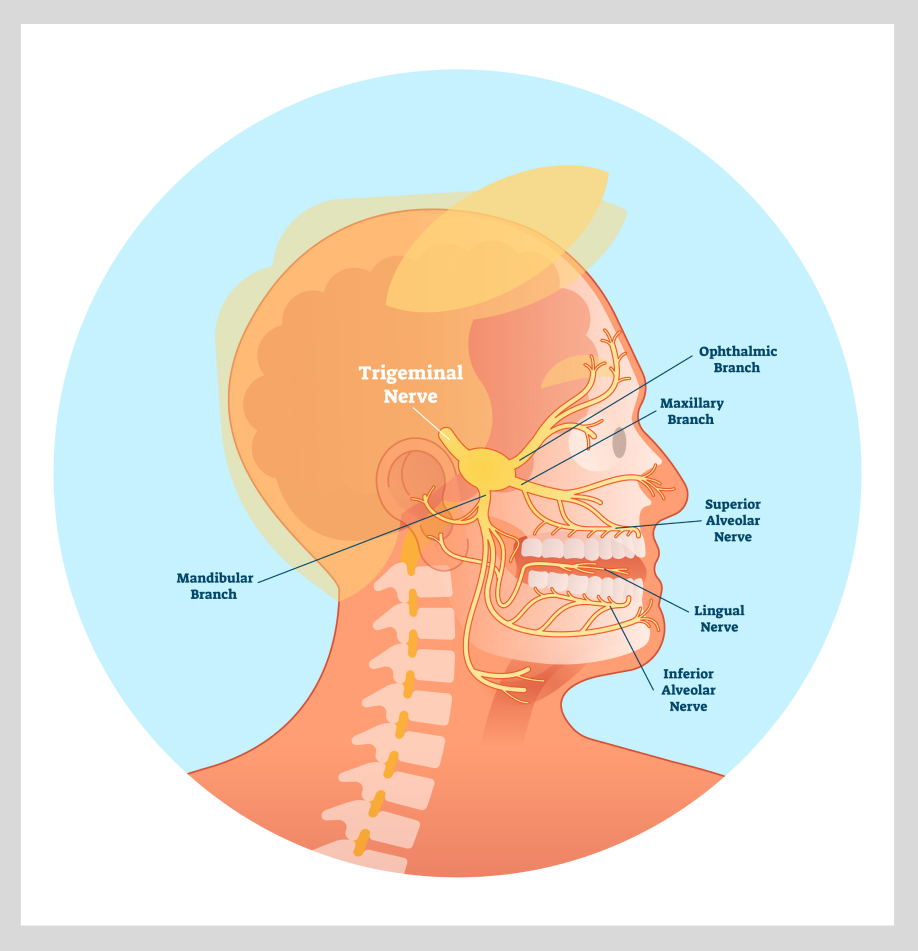
Trigeminal neuralgia doesn't always look the same from one person to the next. But there are characteristic patterns that a trained trigeminal neuralgia specialist will recognize immediately. If you're experiencing any of the following, it may be time to seek evaluation:


Sudden, severe, shock-like pain in the cheek, jaw, teeth, gums, or forehead usually on one side of the face

Pain triggered by light touch, chewing, speaking, brushing teeth, washing your face, or exposure to wind

Episodes that last from a few seconds to a couple of minutes, occurring in rapid succession

Periods of remission followed by flare-ups that grow more frequent or intense over time

A constant, burning, or aching sensation between the sharp attacks atypical or Type 2 TN

Pain that has been misdiagnosed as a dental problem, sinus issue, TMJ disorder, or migraine

Increasing anxiety or avoidance of normal activities eating, talking, going outside due to fear of triggering an episode

Facial pain that does not respond to standard over-the-counter painkillers
One of the most frustrating aspects of trigeminal neuralgia is how often it gets misdiagnosed. Patients frequently undergo unnecessary dental procedures, receive treatment for sinus conditions they don't have, or are prescribed migraine medications that do nothing. If you've been down that road and still don't have answers, a dedicated trigeminal neuralgia specialist in Stafford, TX can help you finally get clarity.


In classical trigeminal neuralgia, the most common underlying cause is a blood vessel - usually a small artery near the brainstem - pressing against the trigeminal nerve root. Over time, this compression wears away the nerve's protective myelin sheath, essentially stripping the insulation from a live wire. Once that protective coating breaks down, the nerve becomes hypersensitive and begins firing erratic pain signals in response to stimuli that should be completely harmless.
But neurovascular compression isn't the only factor in play. Multiple sclerosis, tumors at the base of the skull, and physical trauma to the face or jaw can all damage or irritate the trigeminal nerve. In some cases - classified as idiopathic trigeminal neuralgia - no clear structural cause is identified on imaging, which can make the diagnosis even more frustrating for patients.
What the conventional model often overlooks, however, is the broader role of the nervous system. The trigeminal nerve doesn't operate in a vacuum. It's part of a vast communication network that runs through the brainstem, the upper cervical spine, and into the central nervous system. When there's interference in that pathway - whether from spinal misalignment, chronic inflammation, or disrupted nerve signaling - the result can be a nervous system that's stuck in a state of hyperexcitability. The nerve doesn't just hurt because it's compressed. It hurts because the entire system is amplifying the signal. This is where a nerve-focused approach to trigeminal neuralgia treatment begins to make a powerful difference.
The standard medical playbook for trigeminal neuralgia typically starts with anticonvulsant medications - drugs like carbamazepine or oxcarbazepine - designed to quiet overactive nerve signals. When those stop working or produce intolerable side effects (dizziness, fatigue, cognitive fog, liver complications), the next step is usually surgical intervention: microvascular decompression, radiofrequency ablation, or gamma knife radiosurgery.
For some patients, that path is appropriate. But for many others - especially those who are wary of long-term medication dependency or invasive procedures - there's a gap in the care landscape. That's the gap Texas Nerve and Spine was designed to fill.
As a trigeminal neuralgia specialist practice in Stafford, TX, we approach this condition through the lens of the nervous system as a whole. Our doctors believe that when you restore optimal communication between the brain and the body - what we call the brain-to-body connection - the nervous system can begin to down-regulate its own pain response. Instead of overriding the signal with drugs or ablating the nerve with heat, we work with the body's own healing mechanisms.
Your care plan starts with a thorough evaluation - not a 10-minute intake where someone hands you a prescription and sends you on your way. We assess your spinal alignment, your nerve function, your health history, and the specific pattern of your trigeminal neuralgia pain. From there, our expert panel of doctors - known to patients as "The Dream Team" - designs a customized, non-surgical protocol using advanced therapies proven to reduce nerve irritation, decrease inflammation, and help your nervous system recalibrate. The result, for many of our patients, is trigeminal neuralgia pain relief they haven't experienced since their diagnosis - achieved without a single pill or procedure.


Trigeminal neuralgia is not a condition you want treated by a generalist. It requires a team that understands the complexities of cranial nerve disorders, the relationship between spinal health and facial pain, and the nuances of nerve-based rehabilitation. Here's why patients throughout Stafford, TX and the greater Houston area choose our practice:

With over 25 years of clinical experience focused specifically on nerve pain and chronic pain conditions, our doctors have the depth of knowledge that trigeminal neuralgia demands.

We don't treat your face in isolation. We evaluate the full neuromusculoskeletal chain - from the upper cervical spine through the cranial nerve pathways - to identify every contributing factor.

Our protocols are built around the body's own healing capacity. No prescriptions. No operating rooms. No recovery downtime.

Since 2008, Texas Nerve and Spine has helped thousands of patients suffering from chronic pain and nerve disease reclaim their lives. Our approach works for trigeminal neuralgia because it addresses the same nervous system dysfunction that drives the condition.

We know that trigeminal neuralgia pain doesn't wait, so neither should you. Our Stafford, TX office offers same-day appointments to get you in fast.

Our leadership team built this practice on a simple philosophy: treat every patient the way you'd want your own parent, spouse, or child treated. That commitment shows in every interaction.


By the time most people reach out to us, they've been through a gauntlet of appointments, prescriptions, and diagnostic dead ends. We understand that, and we want your experience here to feel like a turning point - not another revolving door.
Your first visit begins with an in-depth consultation. We'll sit down and listen - really listen - to your story. When did the facial pain start? What does it feel like? What triggers it? What have you tried? How is it affecting your work, your relationships, your ability to just enjoy a meal? We need to understand the full scope of what you're dealing with before we recommend a single thing.
Next, we'll perform a comprehensive neurological and physical examination, evaluating your spine, your cranial nerve function, and the specific areas of dysfunction contributing to your trigeminal neuralgia pain. Based on everything we find, we'll present a clear, honest assessment and a step-by-step treatment plan - including expected timeline, costs, and what results look like based on our experience with similar cases.
No guesswork. No pressure. No vague promises. Just a straightforward path toward relief from a team that specializes in exactly what you're going through.
Trigeminal neuralgia rarely exists in a vacuum. Many of the patients we see also struggle with chronic headaches or migraines, neck pain, TMJ dysfunction, or peripheral neuropathy in other parts of the body. That's not a coincidence - it's a reflection of an underlying nervous system that's in a state of distress.
The trigeminal nerve has deep connections to the upper cervical spine, and research has consistently demonstrated that dysfunction in the C1-C3 vertebral segments can amplify trigeminal nerve excitability. This is why patients who've had whiplash injuries, chronic postural strain, or upper neck problems sometimes develop facial pain syndromes that seem to appear out of nowhere. The structural issue was there all along - the pain was just the last domino to fall.
This interconnection is also why our approach is so effective. When we address the spinal and neurological contributors alongside the trigeminal nerve dysfunction itself, patients often find that multiple symptoms improve simultaneously. The headaches ease. The neck stiffness resolves. The facial pain diminishes. Because we're not chasing individual symptoms - we're restoring the system.

Trigeminal neuralgia is traditionally managed by neurologists and neurosurgeons. However, because the condition involves nerve dysfunction with connections to the spine and central nervous system, specialists who focus on the nervous system as a whole - like the team at Texas Nerve and Spine - are uniquely equipped to offer non-surgical, root-cause treatment that many conventional providers don't explore.
Yes. While surgery is sometimes necessary in severe or refractory cases, many patients experience significant trigeminal neuralgia pain relief through non-surgical approaches that address nerve irritation, spinal alignment, and nervous system regulation. Our Stafford, TX practice specializes in exactly this type of drug-free, non-invasive care.
The reimbursement model at Texas Nerve and Spine allows us to focus entirely on providing the highest standard of care without the restrictions and delays associated with insurance-driven treatment protocols. We'll walk you through all costs before treatment begins - complete transparency, no surprises.
Every patient is different, and the timeline depends on the severity and duration of your condition. Some patients notice improvement within the first few visits; others see progressive improvement over several weeks. Our doctors will outline realistic expectations during your initial evaluation.
In many cases, trigeminal neuralgia is a progressive condition. Episodes may become more frequent, more intense, and harder to manage as nerve damage compounds. Early intervention with a qualified trigeminal neuralgia specialist typically leads to better outcomes and a greater chance of meaningful, long-term relief.
Our clinic is located in Stafford, TX, and we serve patients from Missouri City, Stafford, Richmond, Rosenberg, Katy, Pearland, and throughout the greater Houston metropolitan area. We also regularly see patients who travel from across Texas and beyond for our specialized approach to nerve pain.




You've lived with the lightning bolts long enough. You've endured the medications that made you feel foggy, the dental procedures that didn't help, and the well-meaning doctors who didn't quite understand what you're going through. It's time for something different.
Texas Nerve and Spine is Stafford, TX's trusted destination for advanced, non-surgical trigeminal neuralgia treatment. Our team has helped thousands of patients break free from chronic nerve pain - and we're ready to help you, too.
Call our Stafford, TX office today or complete the form on this page to schedule your consultation. Same-day appointments are available because when every second of facial pain feels like an eternity, you shouldn't have to wait weeks for help.
Texas Nerve and Spine - Trigeminal neuralgia specialists in Stafford, TX since 2008. Advanced nerve care. Real relief. No drugs. No surgery.
Texas volleyball starts its summer workouts Thursday, and head coach Jerritt Elliott has a few questions to answer before the season begins Aug. 22 against Arizona State at the AVCA First Serve event in Milwaukee.Of course, Elliott usually finds solutions to any issues that arise. He enters his 26th season at Texas with a 635-125 record leading the Longhorns, three national championships, seven appearances in a championship match and 19 top-10 finishes in the past 20 years. Last season, Texas went 26-4 and reached a regional final bef...
Texas volleyball starts its summer workouts Thursday, and head coach Jerritt Elliott has a few questions to answer before the season begins Aug. 22 against Arizona State at the AVCA First Serve event in Milwaukee.
Of course, Elliott usually finds solutions to any issues that arise. He enters his 26th season at Texas with a 635-125 record leading the Longhorns, three national championships, seven appearances in a championship match and 19 top-10 finishes in the past 20 years. Last season, Texas went 26-4 and reached a regional final before falling to Wisconsin on its home court.
Advertisement
Article continues below this ad
Here are five questions Elliott will want to answer in preseason workouts.
Texas volleyball: Longhorns to play Wisconsin at Moody Center in 2026
Texas volleyball will play Nebraska, $1 million in NIL opportunities via Players Era Showcase
Fourth-year junior Nya Bunton returns as the most experienced middle blocker on the squad and sophomore Taylor Harvey flashed her potential at middle while earning freshman All-SEC recognition in 2025. But does Elliott have a third option at middle after starter Ayden Ames transferred out of the program and Texas didn’t sign anyone in the portal?
Advertisement
Article continues below this ad
Addy Guido, a 6-foot-4 redshirt freshman from Georgetown, is an outside hitter by trade but has cross-trained at middle blocker. Austin High product Camille Presley, a 2027 middle blocker commit, reportedly reclassified to the 2026 class although Texas has yet to confirm that news. She could be a redshirt candidate based on her youth and relative inexperience.
Libero Emma Halter left Texas as one of the most beloved players in program history after helping the team win back-to-back titles in 2022 and 2023. Fortunately, Elliott has some veteran options when it comes to donning the libero jersey. Senior Ramsey Gary returns for a second season with the Longhorns and seems like a natural replacement considering she started 28 matches last season as a defensive specialist and ranked third on the team with 207 digs. But will senior Anja Kujundžić see an expanded role and slide into that open defensive specialist role, or will touted freshman Emma Cugino take over as a starter on the back row?
Advertisement
Article continues below this ad
Senior Ella Swindle enters her fourth and perhaps final collegiate season as the unquestioned setter after starting all 29 of her matches played a year ago and averaging 8.93 assists per set. Junior Rella Binney excelled as the backup setter while appearing in 30 matches, but freshman Genevieve Harris arrives as the top-ranked setter of her class and enjoyed a stellar summer while playing with the U.S. under-21 national team. The rotation competition behind Swindle could be fierce in the summer.
The Longhorns boast arguably the best set of attackers in the nation with Torrey Stafford (516 kills, .360 attacking percentage), Cari Spears (358, .295) and Abby Vander Wal (280, .249). But 6-foot-3 Henley Anderson arrives from nearby Dripping Springs High School as the top recruit in the nation and looks too good to keep off the floor. Devin Kahahawai, last year’s No. 3 attacker, had just 161 swings a year ago. Expect a lot more than that from Anderson this season.
Advertisement
Article continues below this ad
Based on the returning talent, no spot in the starting lineup seems up for grabs entering the season. Halter and Ames — the former didn’t technically start a match as the libero but rotated in after the first serve — are the only starters gone from last season, but the replacements for those two spots seem set.
Advertisement
Article continues below this ad
Elliott has intriguing options at the outside hitter spot opposite Stafford, who returns as a six-rotation player and one of the preseason favorites for national player of the year honors. Will Spears still start ahead of Vander Wal, who shined for the U.S. under-21 team this summer at the NORCECA Women’s U21 Pan American Cup? Is Anderson a generational player who will force her way into as many swings as possible?
To borrow a phrase popular with Texas football coach Steve Sarkisian, this is a champagne problem for a team loaded at the pin.
Sterling Varsity Football @ StaffordStreaming & TicketingPurchase TicketsGame InfoThe Sterling varsity football team has an away conference game @ Stafford (TX) on Friday, October 30 @ 7p.MatchupRosterGame DetailsTeam ComparisonSterling (Houston)19.5Rushing Yards/GStafford212.7Sterling (Houston)135.0Passing Yards/GStafford161.3Sterling (Houston)131.0Receiving Yards/GStafford162.3Sterling (Houston)154.5Total Yard...
Streaming & Ticketing
Purchase Tickets
Game Info
The Sterling varsity football team has an away conference game @ Stafford (TX) on Friday, October 30 @ 7p.
MatchupRoster
Game Details
Team Comparison
Sterling (Houston)19.5
Rushing Yards/G
Stafford212.7
Sterling (Houston)135.0
Passing Yards/G
Stafford161.3
Sterling (Houston)131.0
Receiving Yards/G
Stafford162.3
Sterling (Houston)154.5
Total Yards/G
Stafford374.0
Sterling (Houston)-
Tackles/G
Stafford46.0
Sterling (Houston)-
Sacks/G
Stafford1.0
Sterling (Houston)3.0
Points/G
Stafford-
Key Players
Avg. Per Game
Jaylan Conner
#4
Rushing Yards
9.591.7
Aiden Seales
#5WR/FS
Kamen Sheppard
#1QB
Passing Yards
135.0161.3
Nate Ray
#2QB
Jayden Jones
#3WR
Receiving Yards
71.046.0
Camari Simmons
#10WR
Kamen Sheppard
#1QB
Total Yards
143.0235.0
Nate Ray
#2QB
Not Enough Data
Tackles
--13.0
Sean Moorehead
#0RB/MLB
Not Enough Data
Sacks
--1.0
Caine Hubbard
#40ILB
Walter Robinson
#13MLB/OLB
Points
6.0--
Not Enough Data
Scoring Averages
| Final | Q1 | Q2 | Q3 | Q4 | |
|---|---|---|---|---|---|
| Sterling | 25.0 | 5.7 | 0.0 | 9.0 | 10.3 |
| Stafford | 41.0 | 7.0 | 8.0 | 0.0 | 14.0 |
Rankings
Texas
#710
#77
Texas Division 4A-1
#65
#2
Region III
#214
#27
Houston
#126
#16
Region: THSCA
#615
#71
Season Recap
Overall Record
1-2
3-0
District
0-0
0-0
Non-District
1-2
3-0
Head to Head
0-0
0-0
Home
0-1
1-0
Away
1-1
2-0
Neutral
0-0
0-0
Common Opponent
0-0
0-0
Playoff
0-0
0-0
In-State
1-2
3-0
Out-of-State
0-0
0-0
Win %
.333
1.000
District %
.000
.000
PF
75
123
PA
98
74



 Call 832-979-5117